
The Vote on Haitian TPS Revealed How Immigration Rule Actually Works
A Republican-led House broke with Trump and voted to protect Haitian immigrants. That is true. It is still not the real account.
A Rebuke, and Something More
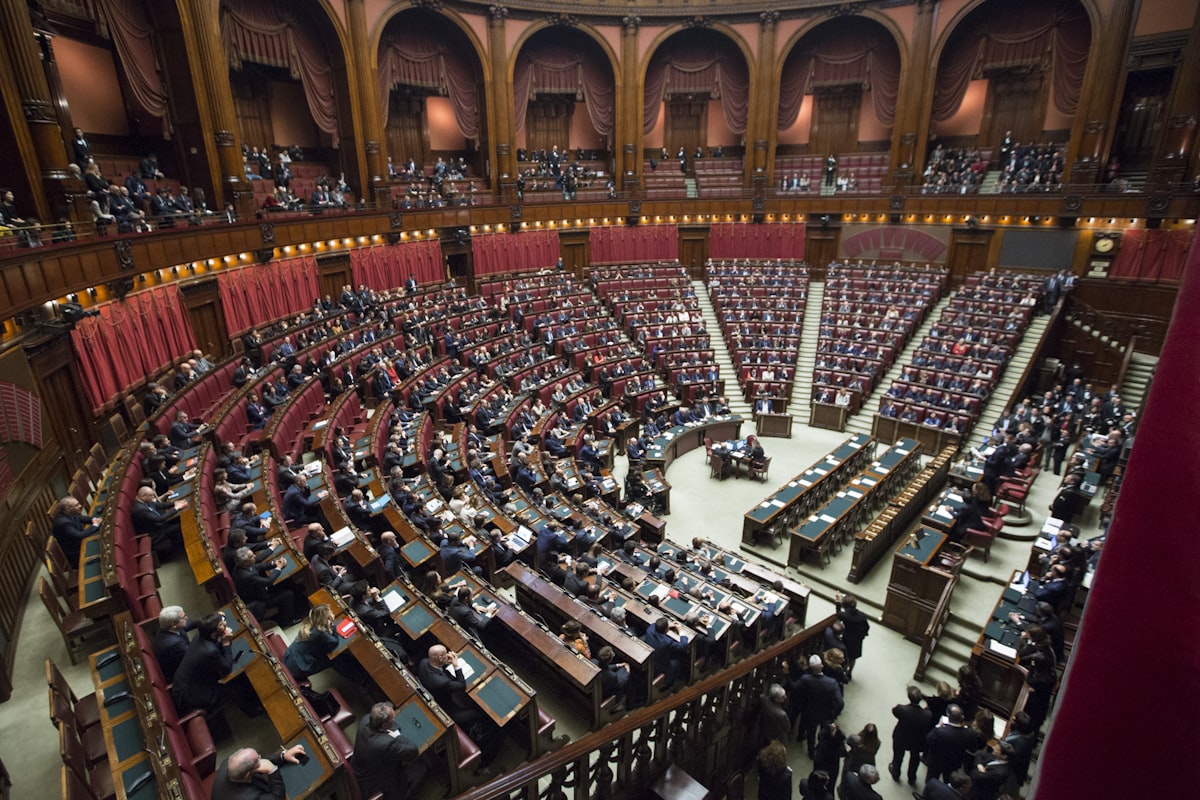
The easiest way to describe the House vote is also the least sufficient one. A Republican-led House broke with Donald Trump and voted to protect Haitian immigrants. That is true. The House passed a bipartisan bill, 224–204, to restore Temporary Protected Status for Haitians for three years, with 11 Republicans joining Democrats after the Trump administration moved to strip those protections. The bill now moves into an uncertain Senate and toward the possibility of a veto.
That happened. It is still not the real account.
To understand what the vote actually revealed, it helps to separate the visible event from the structure beneath it. The visible event looked like a rare act of moderation. The structure beneath it was dependence. The mechanism that forced that dependence into view was pressure.
The Vote Was Selective, Not Transformative
Roughly 350,000 Haitians are covered by TPS, which gives them work authorization and protection from deportation while the designation remains in effect. After Trump revoked that status, their protections were set to expire, though the termination has been paused while the Supreme Court considers the administration’s broader effort to end protections for Haitians and Syrians. The House bill would extend Haitian TPS by statute for another three years. It would not extend the same protection to other groups the administration has targeted, including Venezuelans, Hondurans, and Afghans.
That limit matters. It makes clear that the vote was not a broad rejection of punitive immigration politics. It was a selective response to a contradiction that had become difficult to ignore.
The route the bill took matters too. Democrats used a discharge petition to force it onto the floor. Mike Lawler introduced it with Laura Gillen. Don Bacon defended it openly by pointing to staffing pressures in Nebraska, including in health care. Those details are not secondary. They explain the vote far better than the congratulatory language that followed it. This was not an atmospheric shift in public morality. Specific lawmakers acted under specific institutional pressures because a familiar arrangement was beginning to produce costs in places that could not easily absorb them.
The Public Story Was Too Small
Most coverage framed the vote as a rare Republican rebuke to Trump. That description is not wrong. It is just smaller than the event. It narrows the meaning of the vote to party drama and personal defiance. It turns the story into one about whether Republicans were willing to distance themselves from Trump, when the more revealing question is why they found distance necessary at all.
The answer begins with the way immigration rule is organized in the United States. The system creates populations it can threaten, use, and stigmatize at the same time. TPS is one of the clearest expressions of that logic. It offers protection, but only in a form that remains conditional. It can be renewed, litigated, narrowed, or revoked. It gives the state flexibility while denying permanence to the people living under it. Over time, though, those same people become embedded in workplaces, neighborhoods, districts, and institutions. They stop being temporary in any meaningful social sense even while remaining temporary in law.
That is the contradiction at the center of this vote. The category remains provisional. The dependency does not.
Useful Enough to Keep, Precarious Enough to Threaten
Once that contradiction comes into view, the surrounding rhetoric becomes easier to read. Supporters defended Haitians as contributors, as people who enhance the country, as workers and neighbors. Opponents described them as people who should simply be sent home. The administration used the language of national interest. Trump, for his part, had already spent the campaign period maligning Haitian immigrants and amplifying grotesque falsehoods about them.
Public argument settled into a familiar and narrowing frame: either Haitians were useful enough to keep or illegitimate enough to remove. Missing from that frame was the more serious question of why the system had placed them in a legally revocable condition while quietly allowing local economies and public institutions to organize themselves around their continued presence.
That is what the public story hid. It personalized what was structural. It moralized what was institutional. It treated the vote itself as the event instead of asking what arrangement made such a vote necessary.
The System Needs What It Denounces
The structure underneath is not especially mysterious. First, there is legal precarity. TPS protects people while withholding permanence. Second, there is labor dependence. Employers and districts incorporate TPS holders into the ordinary functioning of everyday life. Third, there is political narration. At the national level, immigrants can be made into symbols of disorder, indulgence, or threat. At the local level, the same people are workers, caregivers, neighbors, and stabilizers whose removal would create immediate disruption.
That split is not an accident. It is one of the governing devices of the system. The population is useful enough to rely on, precarious enough to control, and stigmatized enough to mobilize against.
When Theatrics Collide With Reality
The House vote was what happened when those three layers stopped fitting together smoothly. The administration moved to end Haitian TPS. The courts slowed the immediate result. Haiti remained the kind of place to which “return” could be invoked rhetorically far more easily than it could be defended in practice. Employers and lawmakers in affected districts faced the prospect of labor disruption and administrative strain. Democrats forced a vote. Republicans in exposed districts then had to choose between national anti-immigrant theater and local institutional reality.
That is why this should not be read mainly as a story about courage. It is better understood as a story about stress inside the system.
The Hidden Infrastructure of Ordinary Life
The most important layer, and the one most public accounts leave underdescribed, is the layer of social reproduction. Once Bacon warned that ending TPS would damage health care staffing, the argument ceased to be only about immigration status. It became an argument about how ordinary life is maintained. Who staffs hospitals. Who fills shifts. Who keeps institutions functioning from one day to the next.
Immigration politics is often narrated in the language of legality, borders, and sovereignty. But its actual effects run through work, care, routine, and the hidden maintenance of social continuity.
That is why the word temporary does so much ideological work. It allows the state to describe as provisional a population that has already become part of the everyday reproduction of social life. A government can do that politically. It cannot do it honestly.
What This Vote Actually Exposed
So the House vote matters. It matters precisely because it was not a clean expression of principle. It was more revealing than that. It showed that punitive immigration politics is strongest when it remains theatrical. It becomes unstable when it approaches the point of real institutional consequence. Haitian immigrants were useful as targets right up to the point where their removal threatened workplaces, care systems, and districts already organized around their labor and presence. At that point, one part of the system moved to protect what another part had spent years degrading.
This vote was not simply about Haitian TPS, and it was not simply about one break with Trump. It exposed a larger governing logic. The United States continues to manage immigration through conditionality, discretion, and spectacle, then produces selective exceptions when expulsion collides with the actual requirements of social life. Those exceptions should not be mistaken for structural change. They are better understood as brief moments when the structure becomes visible.
The vote was real. The rebuke was real. But what the House exposed, however briefly, was not just a disagreement inside the Republican Party. It was the operating logic of immigration rule itself.
Sources: Washington Post, Yahoo News, New York Times
CounterLine Analysis
The CounterLine
Not by denying that the rebuke was real, but by correcting the scale of the story. The public account made this look like moderation. The better account is that punitive immigration politics collided with the labor, care, and district realities it depends on while pretending not to depend on them at all.
What looked like a story about conscience was in fact a story about contradiction. Haitian immigrants were kept in a legally precarious category while becoming embedded in the ordinary functioning of workplaces, health systems, and local economies. Once removal threatened those institutions, part of the same political order that had tolerated the targeting moved to preserve them.
This vote was not simply about Haitian TPS, and it was not simply about one break with Trump. It exposed a larger governing logic. The United States continues to manage immigration through conditionality, discretion, and spectacle, then produces selective exceptions when expulsion collides with the actual requirements of social life. Those exceptions should not be mistaken for structural change. They are better understood as brief moments when the structure becomes visible.
Comments