
Axios Turns a Ceasefire Power Struggle Into an Insider Shock Story
Axios wants the reader to register the shock before noticing the structure.
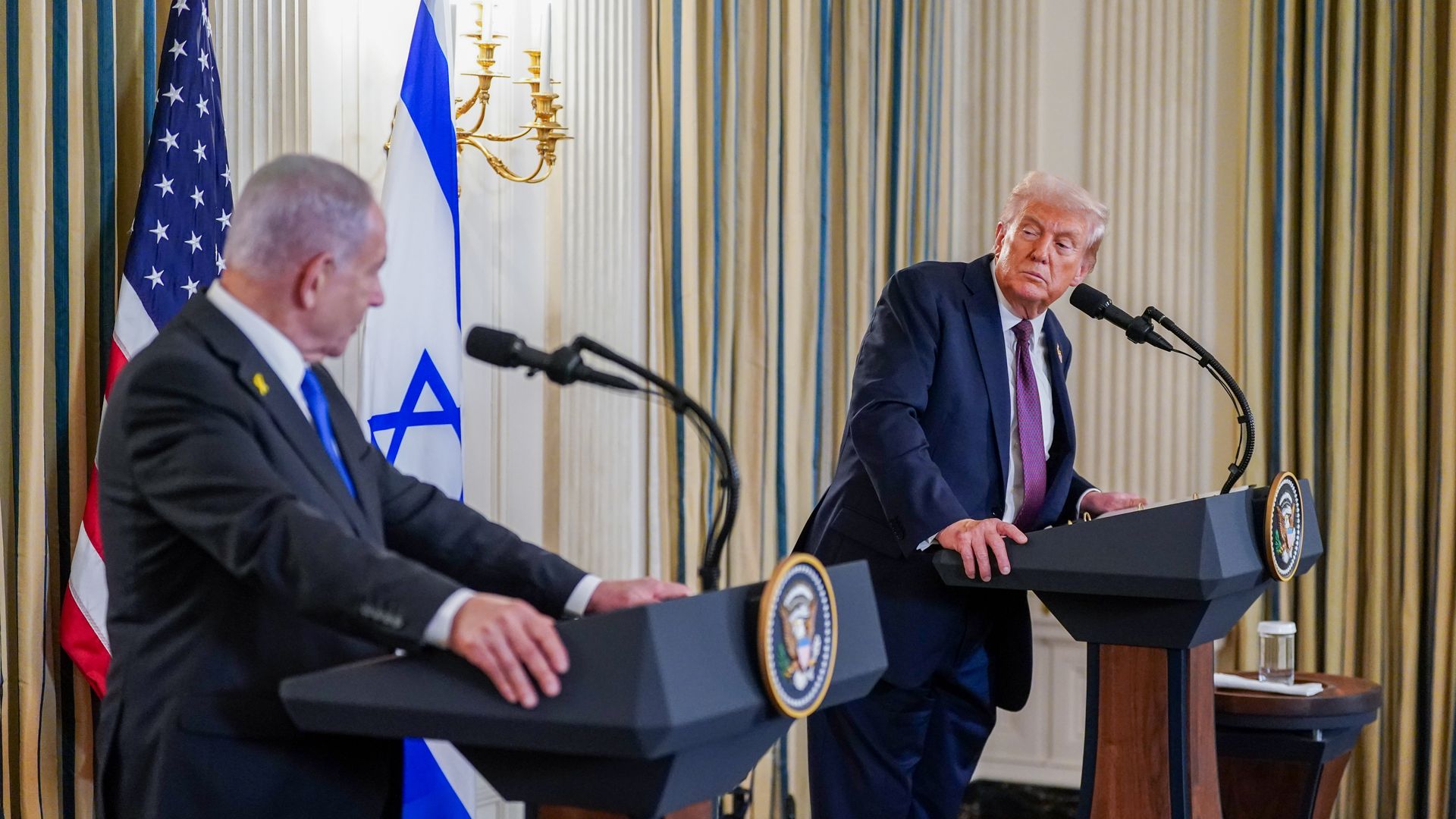
Axios wants the reader to register the shock before noticing the structure. Its headline makes the event legible as a personal rupture: Trump “shocked” Netanyahu by declaring Lebanon strikes “prohibited.” The photo beneath it reinforces the same frame, staging the story as a two-man drama between allied principals. Then the lede moves straight to Israeli requests for White House clarification. The sequence matters. It makes elite surprise the event before it makes ceasefire power the event.
The Story Is About the Room, Not the Region
Axios turns a power struggle into a reaction story. The article is built out of the language of insider disturbance: Netanyahu is “stunned and alarmed,” aides are “scrambling,” Israeli officials are “caught off guard,” the White House is pressed to clarify. That is standard access-journalism choreography. Public reality arrives first as what powerful people felt, then as what their institutions said next.
Lebanon is mostly the setting for that exchange. The central drama is not what strikes mean, but how one major actor reacted to another actor’s wording. A ceasefire dispute becomes an insider shock story.
What the Shock Frame Hides
What disappears first is hierarchy. Axios notes that Trump’s phrasing implied an order Israel “had no choice but to obey,” and it lays out the ceasefire language distinguishing offensive action from claimed self-defense. But it treats the deeper structure mainly as dramatic context. The United States is not merely commenting on Israeli force here; it is helping define its operational boundaries. The word “prohibited” matters because it briefly made that relationship visible.
What disappears next is Lebanon as a political subject. Lebanon appears largely as the place where strikes may or may not continue, not as a sovereign arena with its own public, its own political stakes, and its own civilian exposure.
What disappears most quietly is consequence. The article is detailed on contradiction, process, and clarification. It is thinner on what bombing means beyond procedural compliance. The reader gets the semantic dispute in high resolution and the human stakes at lower resolution.
Why This Packaging Works So Well
Because it is fast, legible, and safe.
“Trump shocked Netanyahu” is a clean news object. It gives the reader a protagonist, an emotional cue, and an easy reason to click. A headline about patronage, dependency, and the conditional autonomy of an ally would be more structurally honest and much less elegant as a media product.
It is also institutionally comfortable. Insider reaction reporting keeps the story inside familiar territory: sources, backchannel confusion, policy clarification, elite alarm. That allows the outlet to stay close to official speech without lingering too long on the power arrangement that made the speech matter in the first place.
Shock is easier to narrate than hierarchy. Reaction is easier to package than dependence.
CounterLine Correction
This is not mainly a story about Trump surprising Netanyahu. It is a story about how one word — “prohibited” — briefly exposed the command structure inside a ceasefire dispute, and how Axios converted that exposure into an insider shock story.
The important fact is not simply that Israeli officials were startled. The important fact is that public language momentarily made the hierarchy legible, and the coverage re-centered elite reaction instead of that hierarchy.
A cleaner frame: Axios turns a ceasefire power struggle into an insider shock story.
The Tell to Watch Next Time
When reading diplomacy coverage, ask a blunt question: is the story centered on what the language reveals about power, or on how powerful people felt about hearing it?
If the article gives you shock, scrambling, clarification, and insider reaction, but not asymmetry, dependency, civilian consequence, or structural power, you are probably reading a process frame rather than the record.
That does not make the reporting false. It makes it partial in a very familiar way.
CounterLine Analysis
The CounterLine
What disappears first is hierarchy. Axios notes that Trump's phrasing implied an order Israel had no choice but to obey, and it lays out the ceasefire language distinguishing offensive action from claimed self-defense. But it treats the deeper structure mainly as dramatic context. The United States is not merely commenting on Israeli force here; it is helping define its operational boundaries. The word 'prohibited' matters because it briefly made that relationship visible. What disappears next is Lebanon as a political subject. Lebanon appears largely as the place where strikes may or may not continue, not as a sovereign arena with its own public, its own political stakes, and its own civilian exposure. What disappears most quietly is consequence. The article is detailed on contradiction, process, and clarification. It is thinner on what bombing means beyond procedural compliance.
This is not mainly a story about Trump surprising Netanyahu. It is a story about how one word — 'prohibited' — briefly exposed the command structure inside a ceasefire dispute, and how Axios converted that exposure into an insider shock story. The important fact is not simply that Israeli officials were startled. The important fact is that public language momentarily made the hierarchy legible, and the coverage re-centered elite reaction instead of that hierarchy.
Comments